
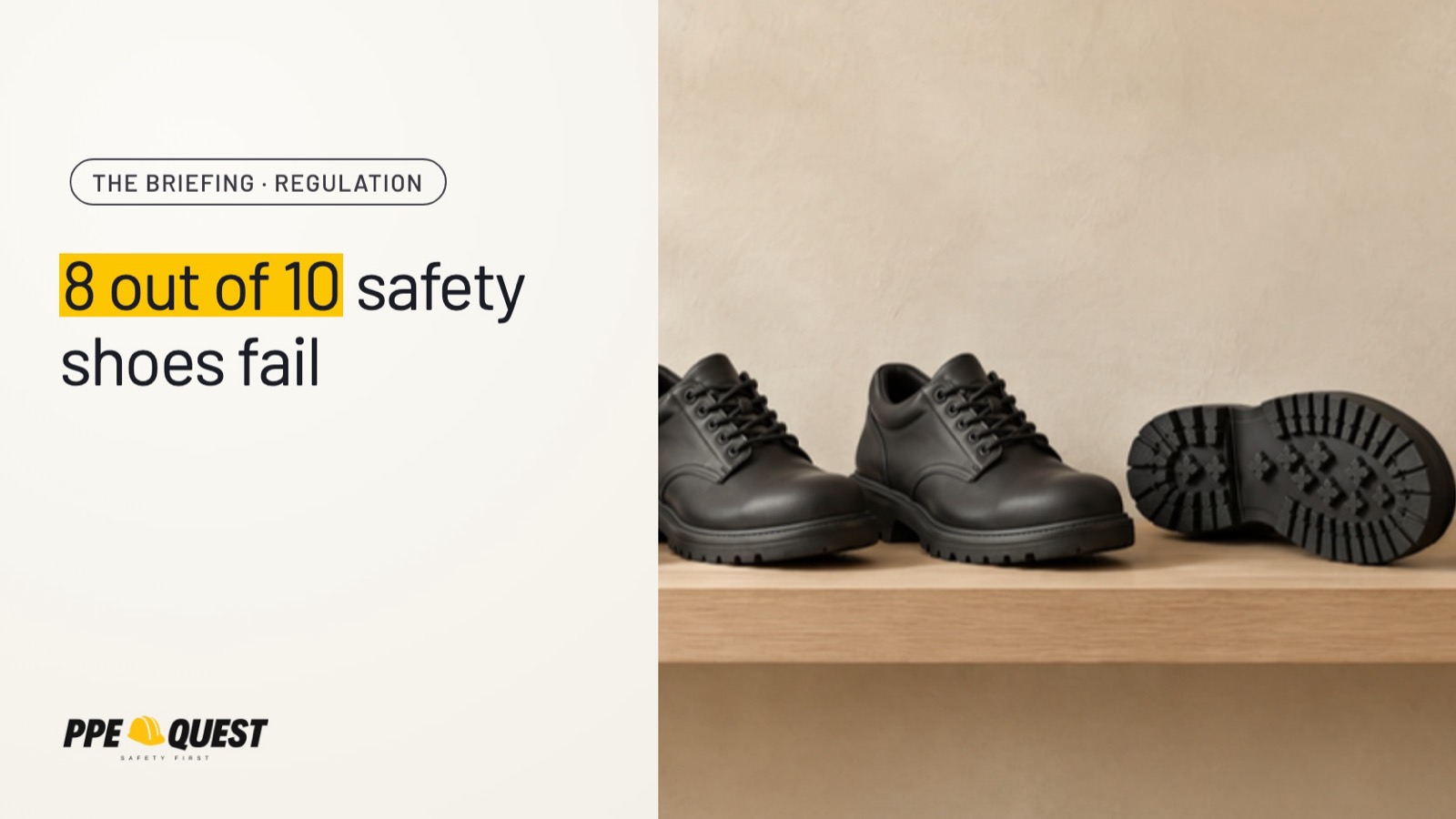
Every year, the authorities that check products in Europe team up and test one type of product together. This time, it was safety shoes. The European Commission published the results on 13 October.
They looked at 83 models, bought in eight countries. About two thirds were bought online, the rest in shops. The result: 82 per cent didn’t meet the rules. That number counts both failed lab tests and missing paperwork.
What went wrong
- Static electricity. Many safety shoes are made to let static drain away, so you don’t make a spark. A lot of them didn’t.
- Toes and soles. Some shoes didn’t protect well enough against things falling on the toes, or against nails coming up through the sole.
- Paperwork. Instructions that were missing or unclear. The wrong protection class, or none. No declaration of conformity. A CE mark that was missing or rubbed off.
And then the sentence that should worry everyone. The Commission says some shoes may pass certification as a prototype, but the ones you actually buy fail.
What the authorities did
- 24 models banned from sale or withdrawn
- 4 models recalled
- 15 companies warned or fined (one got a €7,000 fine for shoes that lacked the protection they claimed)
- 6 models fixed
Buyer’s takeA CE mark and a nice product page aren’t proof. Ask for the declaration of conformity and the test certificate, and check they match the shoe in your hand. If the offer sounds too good, it probably is.
Seller’s takeCheck your own range before an inspector does. For every shoe, you should have the instructions in the local language, the declaration, and the name of a responsible company in Europe. Ask your manufacturer how they check that production still matches the tested sample.
Sources: European Commission, 13 October 2026 · The Brussels Times, 13 October 2026
 USA