
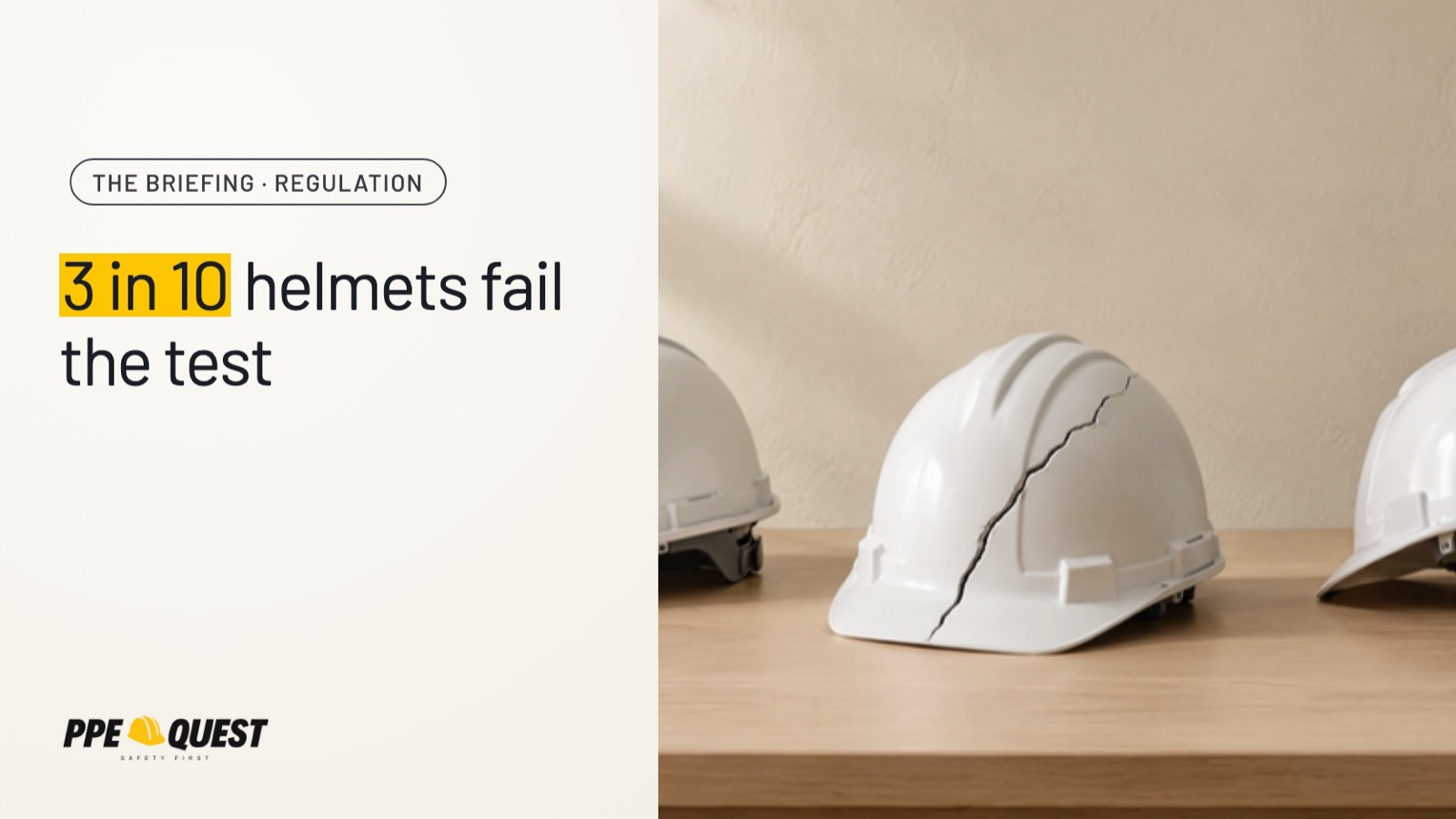
The same campaign also tested 65 safety helmets for work, bought online and in shops in eight countries. The Commission published these results on 15 September. We didn’t cover them at the time, and they belong next to the shoes.
The result: 46 helmets passed. 19 didn’t. That’s 29 per cent.
What was tested
- how well the helmet absorbs a blow
- whether a sharp object can get through the shell
- whether it resists flames
- how well the chin strap is attached
- whether the markings and labels last
The blow and sharp-object tests were also done after heat and cold, after soaking in water, and after ageing in UV light. That’s what a helmet goes through on a real site.
What went wrong
Most failures were in the most basic job a helmet has: absorbing a blow. The authorities rated eight of the failures as a serious risk, and four more as a high risk.
What the authorities did
Six helmets were taken off the market, two were recalled and one was banned from sale. Seven companies got a warning. Eight helmets are now listed on Safety Gate, the EU’s public alert system for dangerous products.
One piece of the Commission’s advice is worth repeating: a helmet that has taken a hit should be thrown away, even if you can’t see any damage.
Sources: European Commission, 15 September 2026 · The Brussels Times, 15 September 2026
 USA