
 USA
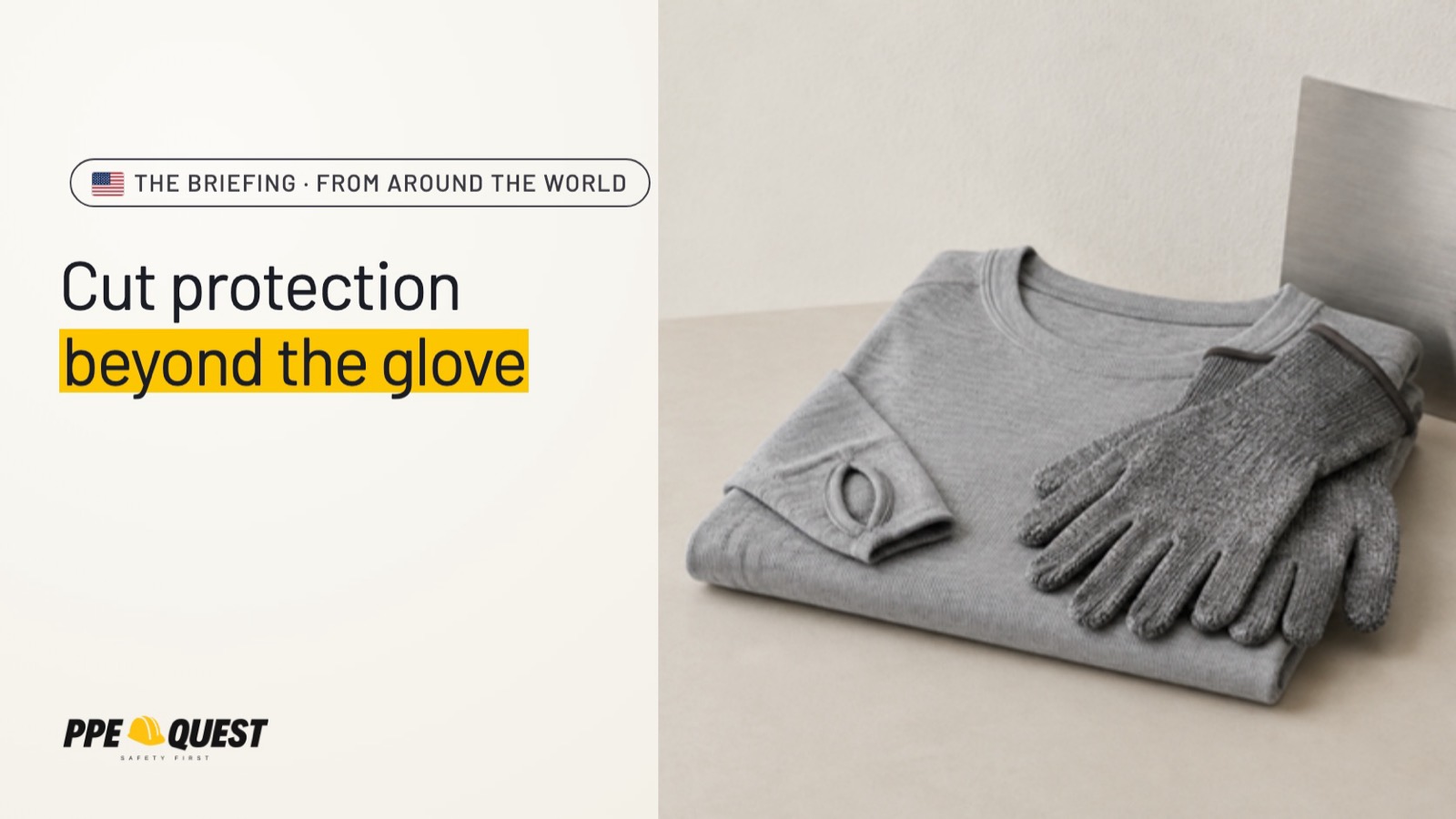
Most cut protection stops at the wrist. Many cuts don’t. The US company Magid has launched a long-sleeve pullover with cut protection (the M-Defense DX+). The cut-resistant fabric covers the sleeves and the front of the body.
How it’s made
- Cut-resistant sleeves and front, where sharp edges are most likely to catch.
- A normal fabric back, on purpose, so the top stays lighter and cooler to wear all day.
- Thumb loops, so the sleeves don’t slide up and leave a gap between the glove and the sleeve.
Why the idea makes sense
Think about how people handle sheet metal, glass or blades. They carry the sheet against their body, reach into machines, or lift panels with their arms. The edge often catches the forearm, not the hand. And sleeves that slide up, or get rolled up because it’s warm, are a common gap. A glove can’t protect what it doesn’t cover.
Two things to know before you use it in Europe
First, the cut rating. The pullover is rated ANSI A6, which is an American rating. In Europe, cut protection on gloves is shown with the letters A to F under EN 388. The two systems are tested differently, so you can’t simply translate one into the other.
Second, the pullover only protects where the special fabric is. If your workers could get cut on the back or the sides, for example when they carry sheets against their body, this design doesn’t cover it.


 Canada