USA
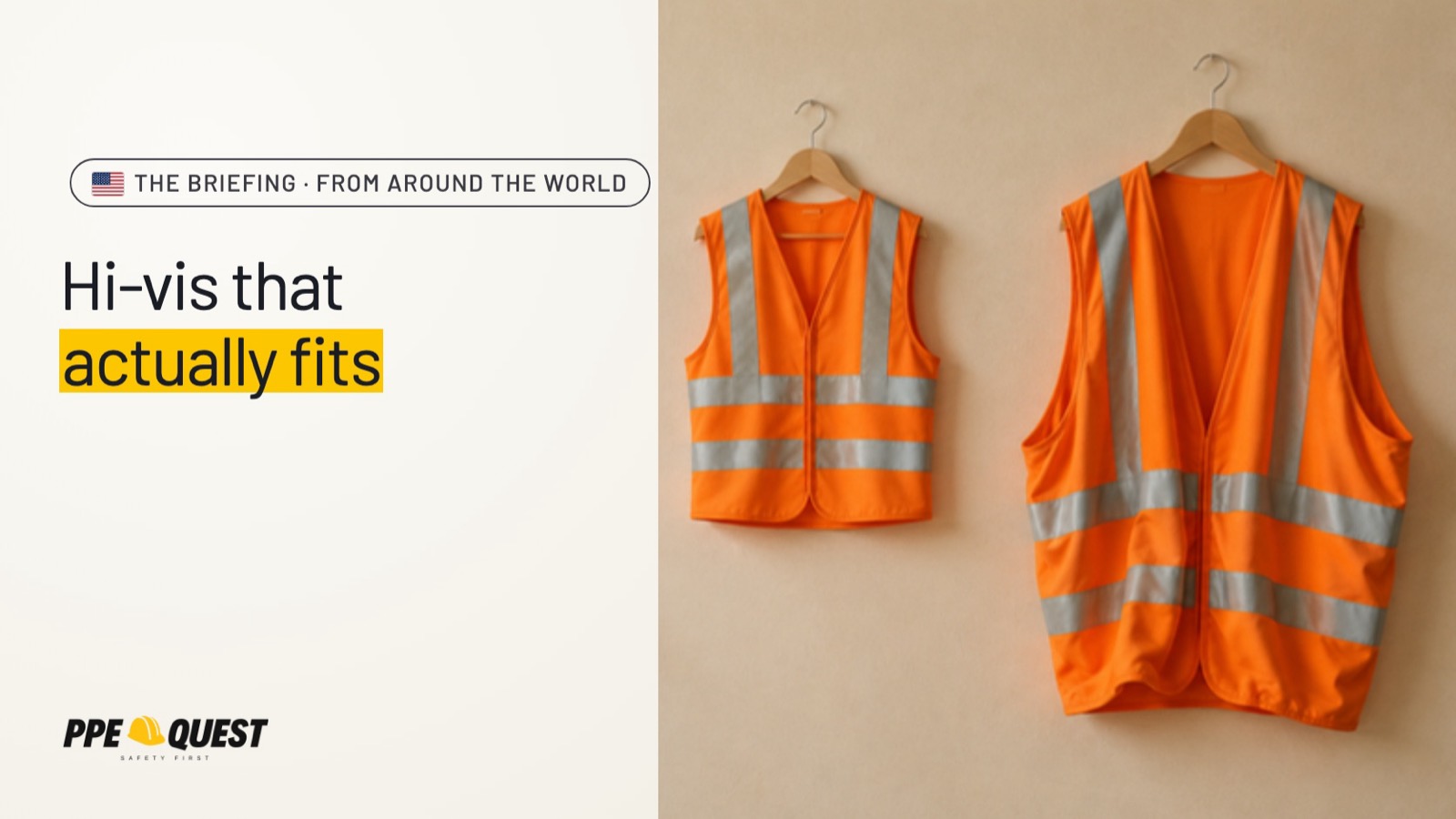
High-visibility clothing only works if it’s worn properly. And a vest that’s two sizes too big isn’t worn properly. It flaps, catches on machines, and the reflective stripes slide to places where nobody can see them.
On 26 October, the US safety equipment association ISEA published a new edition of the American hi-vis standard, ANSI/ISEA 107-2026. Fit is one of the main reasons for the update.
What changed
- Smaller sizes made easier. Hi-vis garments need a minimum amount of fluorescent fabric. Until now, the US standard allowed a bit less of it only on the very smallest size. Now that allowance runs all the way up to Medium for the most common vests and jackets (Type R, Class 2 and 3). So manufacturers can make small sizes that fit a small body and still pass.
- Updated lab tests, for things like colour fastness, tear strength and reflectivity. The pass marks stay mostly the same.
- More paperwork on request. A declaration of conformity per style, and labels that must stay readable for the life of the garment.
- What stays the same: the garment types, the classes and the three fluorescent colours.
Old and new labels will exist side by side for a while. Garments made to the 2020 edition don’t suddenly become non-compliant.
And in Europe? This is the American standard. In Europe, hi-vis is tested to EN ISO 20471, which is a different system. That one is being revised too, for the first time since 2013. The draft of the new version has been through its vote at ISO, but the final standard isn’t out yet.
Sources: ISEA, 26 October 2026 · OH&S, 28 October 2026 · ISO: ISO/DIS 20471
 Canada