

I've always been a gadget fan! Growing up I used to love going into electronic shops to have a look at computers, video cameras and of course video game consoles. (Side note: My first video game console was a gameboy - the big grey block one - which I still have...and one of my favourite ways to relax is to play some games on my Switch #elderscrollsVIwhen?).
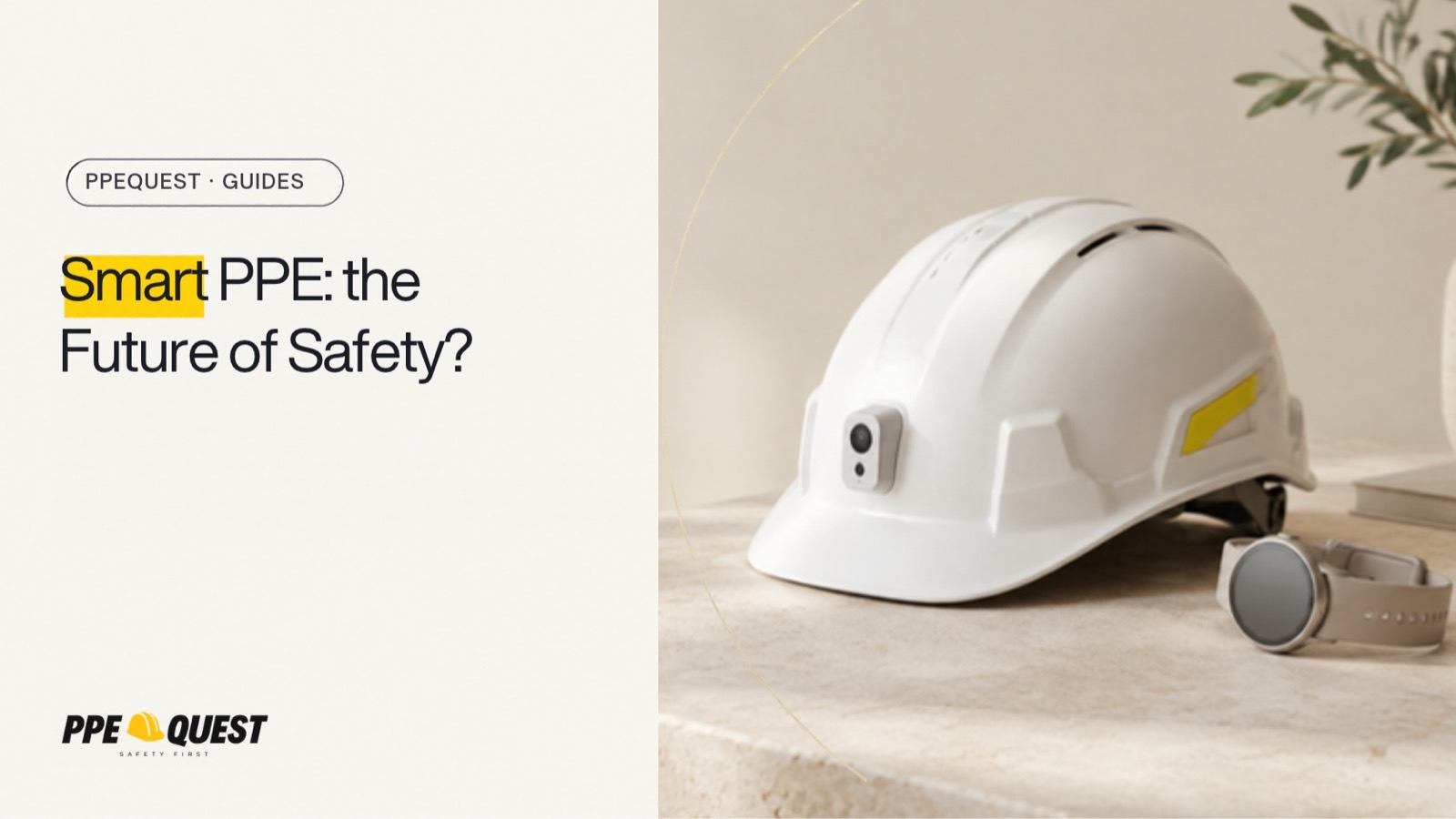
And now it seems that my love of gadgets can be combined with my love of PPE judging by the trends of "smart PPE".
In June, it was announced that the "world’s first smart safety shoes" would be released in Autumn 2025.
These innovative shoes will monitor the wearer's movement patterns and send out an alert if any abnormal situation occurs – for example, a fall. This opens up exciting new possibilities for real-time injury detection, especially in high-risk environments like construction, logistics, or heavy industry.
This relatively new form of personal protective equipment uses modern technology built directly into safety gear, making it smarter, more responsive, and more user-friendly – all in the name of occupational safety.
What is Smart PPE?
Smart PPE refers to protective gear equipped with technology that monitors safety data in real time, offers protection, and even communicates. From helmets to jackets to safety shoes – these items use sensors and smart features to help workers stay safe and comply with all standards.
RFID in Smart PPE
RFID, or Radio-Frequency Identification, is a technology that allows objects to be identified and tracked wirelessly. Small electronic tags are attached to objects, and a reader recognizes them via radio waves. When an RFID tag comes within range, it transmits a unique ID – allowing the system to instantly identify and track the object.
In the context of Smart PPE, this means RFID tags can be integrated into helmets, gloves, or safety vests to:
track location
monitor usage
check maintenance status
This ensures that the right equipment is not only present but also ready for use – and all of this without the need for constant manual checks.
Advantages, Challenges & Legal Considerations
Smart PPE brings many advantages but also raises challenges and legal questions. Here are the key points:
1. Data Privacy
Issue: Smart PPE often collects data about workers – e.g., location, health data, and activity. Some employees may feel uncomfortable being constantly monitored.
Legal Implication: Data protection laws (like the GDPR in Europe) govern how personal data can be processed. Employers must ensure that only necessary data is collected and that employees give their consent.
2. Reliability & Data Security
Issue: Smart PPE depends on technology and connectivity, which can fail. In remote areas, connectivity may be poor, affecting the functionality of safety systems.
Legal Implication: If an employee relies on Smart PPE and it fails, there could be legal consequences. Employers should ensure equipment is properly maintained and emergency plans are in place.
3. Cost & Accessibility
Issue: Smart PPE is often more expensive than traditional equipment, which can be a hurdle for smaller companies. Ongoing costs for updates and maintenance must also be considered.
Legal Implication: Currently, there’s no legal requirement to use Smart PPE – but that could change. If it becomes mandatory, companies may need to invest or rely on government support.
4. Acceptance & Training Needs
Issue: Some employees are skeptical about using new tech – due to privacy concerns or because it requires extra training.
Legal Implication: Employers should invest in training so workers can use Smart PPE safely. Many countries legally require proper training when using PPE.
5. Certifications & Standards
Issue: Smart PPE is evolving faster than existing safety standards. It’s not always clear whether smart features meet current regulations.
Legal Implication: Employers must ensure that any Smart PPE complies with current standards and is approved by relevant authorities. This can complicate implementation, as some Smart PPE products may not be certified in certain regions.
Conclusion
I’m truly excited about how Smart PPE is transforming workplace safety and offering a future where hazards can be detected and prevented in real time.
The innovations clearly demonstrate how these tools can make a real difference on construction sites and other high-risk environments.
At the same time, issues like:
data protection
system reliability
legal compliance
must be carefully managed.
If companies keep these aspects in mind, they can implement Smart PPE in ways that respect employee rights while strengthening safety culture.
I’m looking forward to seeing how this technology continues to develop – and hopeful that it will help make workplaces:
safer
better connected
better protected
Source to article about "World's First Safety Shoes" found on HSI https://www.healthandsafetyinternational.com/article/1920707/smart-safety-shoes-step-future-workplace-sos?bulletin=hsi-ppe-briefing&utm_medium=EMAIL&utm_campaign=eNews%20Bulletin&utm_source=20250605&utm_content=HSI%20PPE%20Briefing%20(12)::www_healthandsafetyintern_3&email_hash=


